
Rose Garden
The Rosengarten vineyard borders the Sonnleithen and Bergen vineyards to the south, and also forms the border with the neighboring Kremstal region to the north. The vineyards are terraced and exposed to the northeast, east, and southeast. They are located at elevations between approximately 210 and 310 meters above sea level. The vines are mostly planted on loess, a calcareous, deep, and easily cultivated soil. The uppermost, rooted loess sections are often loamy, meaning they are more clayey and less calcareous. Below, to a depth of over 5 meters, calcareous, mica-rich loess predominates. Loess is calcareous rock dust (silt) that was blown here from the then sparsely vegetation-covered Alps during the cold phases of the Ice Age. It now forms a loamy-sandy, always calcareous, and highly absorbent soil with a balanced chemical and mineralogical composition. The vines in the northwest corner of the vineyard are planted on weathered conglomerate of the Hollenburg-Karlstetten Formation. The deposits of the Hollenburg-Karlstetten Formation consist largely of calcareous, solidified carbonate gravel, the conglomerate. These are approximately 15-million-year-old river and delta deposits from a river in the Limestone Alps, the so-called Ur-Traisen, which deposited its debris in the foreland. With its deep loess soils, the vineyard is predestined for the Grüner Veltliner variety, which also occupies the majority of the area. It is one of the largest vineyards in the Traisen Valley. The vineyard received its evocative name due to its beautiful location and the former presence of numerous wild roses. The vineyard name "Rosengarten" dates back to at least the 19th century (administrative map 1:28,000, 1864-1881) in this spelling. At that time, it referred to the eastern vineyards of the vineyard, while the western, upper vineyards were called "Haidach."
Filter
Sort by:
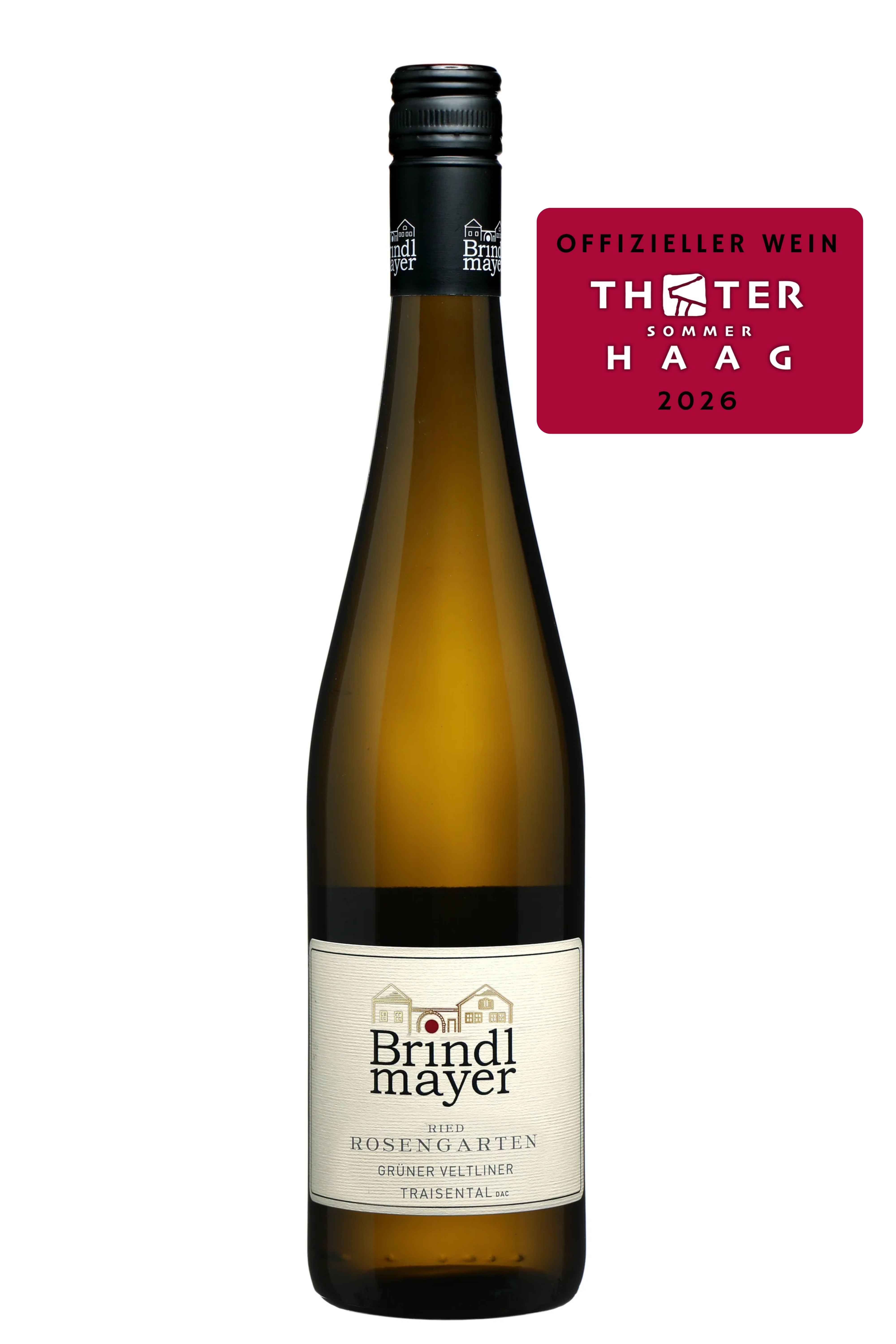
Grüner Veltliner Rosengarten Traisental DAC
Sale price€8,70


